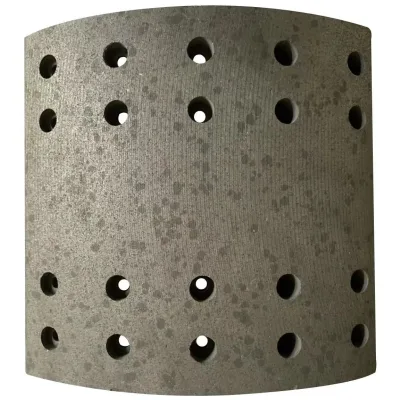
Source auto brake lining for Trucks, Buses, and Commercial Vehicles
Find 19 verified auto brake lining options from Chinese manufacturers. Buyers can compare specifications like WVA codes, friction levels, and certifications for truck brake systems.
Key considerations
Products List


Comprehensive Sourcing Guide
Strategic Sourcing Guide for Auto Brake Lining Procurement
Navigating the global market for auto brake lining requires a disciplined approach that prioritizes technical alignment, regulatory compliance, and supply chain reliability. The core keyword "auto brake lining" encompasses a diverse range of components designed for drum and disc brake systems, with specific applications varying from heavy-duty truck fleets to passenger vehicles. Buyers must distinguish between generic listings and verified product attributes to ensure safety and performance. This guide synthesizes available market data to provide a framework for evaluating suppliers, understanding technical specifications, and managing procurement risks without relying on unverified claims or specific vendor recommendations.
Technical Specifications and Classification Standards
The foundation of any successful procurement strategy lies in the precise identification of technical specifications. Auto brake linings are not interchangeable across all vehicle types; they are engineered for specific friction characteristics, dimensions, and mounting positions. The market data indicates a clear segmentation based on the WVA (Verband der Automobilindustrie) numbering system, a critical standard for identifying compatible brake components. Observed listings include specific WVA numbers such as 19384, 19562, 19494, 19393, and 19370. These numbers serve as unique identifiers for the friction material's geometry and performance profile.
Furthermore, the physical classification of the lining is paramount. The product attributes distinguish between Drum Brakes and general brake systems. Specific entries note the Drum Brakes Classification as "Brake Drum," while other attributes specify the Type as "Brake Lining." Buyers must verify whether the component is intended for the Front or Rear position of the vehicle, as the load distribution and thermal requirements differ significantly between these locations. For instance, some product records explicitly list the Position as "Rear," while others specify "Front."
Dimensional specifications are equally critical. One observed standard references a width of 203mm, while another entry provides a complex dimensional profile of 195×162×13/16 235×162×8/1. These measurements dictate the physical fitment within the brake assembly. Additionally, the FMSI (Federal Motor Vehicle Safety Standards Identification) number, such as 4702A, serves as another layer of verification for North American market compatibility. When sourcing, buyers should cross-reference the WVA and FMSI numbers against their vehicle's service manual to ensure exact compatibility, rather than relying on generic descriptions.
Compliance, Certification, and Regulatory Frameworks
Regulatory compliance is the non-negotiable pillar of brake lining procurement. The safety of the end-user depends on the manufacturer's adherence to international and regional standards. The observed market data reveals a variety of certification claims, including ISO classifications, FMVSS 121D TEST, and GB/T 5764-1998. These standards represent different regulatory regimes; FMVSS 121D is specific to heavy-duty truck braking systems in the United States, while GB/T standards are Chinese national standards.
Buyers must verify the specific certification status of the product they intend to purchase. Some listings mention ISO/TSECE or ECE R90 certification, with one specific note indicating "ECE R90 From Holand." This suggests a European Economic Community approval, which is essential for vehicles operating within Europe. The presence of ISO certifications generally indicates that the manufacturing process meets quality management standards, but buyers should confirm the specific ISO standard (e.g., ISO 9001) rather than assuming a blanket certification.
Material composition is another critical compliance factor. The data explicitly notes Non-Asbestos material properties. Asbestos was historically used in brake linings for its heat resistance but is now banned in many jurisdictions due to severe health risks. A verified "Non-Asbestos" claim is a baseline requirement for modern procurement. However, buyers should also inquire about the Friction Level, with one observed attribute listing FF. This classification indicates the coefficient of friction, which must match the vehicle manufacturer's specifications to prevent brake fade or locking.
Cost Drivers and Economic Variables
Understanding the cost structure of auto brake linings is essential for budgeting and negotiation. The observed price range in the market spans from 0.2 to 20 USD, a wide variance that reflects differences in material quality, volume, and packaging. This range is not indicative of a single product but rather the spectrum of available options, from basic components to high-performance, certified units.
The MOQ (Minimum Order Quantity) is a significant cost driver. The data shows an observed MOQ range of 1 to 1600 units. For small-scale buyers or those testing new suppliers, a low MOQ of 1 or 400 units (as seen in specific listings) may be necessary. However, larger fleets often benefit from higher volume orders to reduce the per-unit cost. The Main Market destinations also influence pricing; products targeting South America, North America, Eastern Europe, and Africa may have different pricing structures based on local demand and shipping logistics.
Packaging costs are often overlooked but can impact the total landed cost. Observed packaging methods include 4PCS Per Film, 2 Films /Box, Two Boxes/Carton, Box+Pallet, and Neutral or Color Package. Customized packaging, such as Color and Customization Packing, may incur additional fees. Buyers should factor in the cost of palletization and carton reinforcement, especially for international shipping, to avoid damage during transit. The Delivery Time of 25~40 days also represents a cost variable, as longer lead times may require higher safety stock levels, tying up working capital.
Typical Applications and Vehicle Compatibility
Auto brake linings are applied across a vast array of vehicle types, from light passenger cars to heavy-duty commercial trucks. The market data highlights specific applications, such as the Truck Brake System, indicating a strong segment for commercial vehicle maintenance. One specific attribute lists the Vehicle Type as Volvo, suggesting compatibility with European heavy-duty truck manufacturers.
The Main Market distribution provides insight into the typical application regions. Products are frequently listed for Mild East, South America, North America, Eastern Europe, Southeast Asia, Africa, Western Europe, Eastern Asia, Northern Europe, Oceania, Southern Europe, Central America, South Asia, and the Domestic Market. This global reach implies that the supply chain is robust, but it also means buyers must be vigilant about regional standards. For example, a lining certified for the Domestic Market in China may not meet the FMVSS 121D requirements for the US market.
The Long Life Time attribute, noted as 3 Months Warranty in some listings, suggests a performance expectation for the product. However, warranty periods can vary significantly based on the application. Heavy-duty truck linings typically require longer service life compared to passenger car linings. Buyers should verify the expected lifespan based on their specific usage patterns, such as city driving versus long-haul highway transport, as these factors heavily influence wear rates.
Supplier Evaluation and Origin Verification
Evaluating suppliers requires a focus on origin and manufacturing capabilities. The observed product origins include Haiyan, Jiaxing, Zhejiang China, Shandong, China, and a general China designation. These regions are known for automotive component manufacturing, but the specific location can impact logistics and communication. Suppliers in Zhejiang and Shandong are established industrial hubs, but buyers should verify the specific factory location to ensure it aligns with their logistical needs.
The Customization attribute is listed as Available, indicating that suppliers are willing to adapt products to specific buyer requirements. This is a valuable feature for buyers with unique vehicle models or specific performance needs. However, customization often extends lead times and may affect the MOQ. Buyers should assess the supplier's capacity for customization by reviewing their production capabilities and past examples of tailored orders.
Supplier reliability is further indicated by the Delivery Time and MOQ flexibility. A supplier offering a 25~40 days delivery window and an MOQ of 400PCS demonstrates a balance between production capacity and order flexibility. Buyers should prioritize suppliers who provide clear, consistent lead times and are transparent about their production schedules. The presence of ISO certifications and adherence to standards like GB/T 5764-1998 also serve as indicators of a supplier's commitment to quality management systems.
Quality Control and Long-Term Procurement Considerations
Implementing a robust quality control (QC) process is essential for mitigating risks associated with brake lining procurement. Given the safety-critical nature of the product, buyers should insist on third-party testing reports that verify the Non-Asbestos claim and the Friction Level. The FMVSS 121D TEST standard, if applicable, should be a mandatory requirement for heavy-duty truck components. Buyers should also verify the Package Size, such as 435285245, to ensure it fits within their storage and shipping constraints.
Long-term procurement considerations involve building a sustainable supply chain. The Main Market diversity suggests that buyers can source from various regions, but consistency is key. Buyers should aim to establish long-term relationships with suppliers who can guarantee consistent quality over time. The 3 Months Warranty mentioned in some listings should be treated as a baseline; buyers should negotiate warranty terms that reflect the actual expected lifespan of the product in their specific application.
Finally, buyers must remain vigilant about the Standard and Specification consistency. The data shows multiple product models, including 19384, 4702A, 19562, 19494, 19393, 19370, 4515-, 19151, and SCHMAN Front. Each model corresponds to a specific WVA number and application. Buyers should maintain a detailed inventory of these specifications to avoid ordering errors. By adhering to these technical and procedural guidelines, buyers can navigate the complex auto brake lining market with confidence, ensuring safety, compliance, and cost-effectiveness in their procurement operations.
Comparative Analysis of Product Attributes
To facilitate clearer decision-making, the following table summarizes the key attributes observed in the market data, highlighting the variability in specifications and certifications.
| Attribute Category | Observed Values / Ranges | Relevance to Procurement |
|---|---|---|
| WVA Number | 19384, 19562, 19494, 19393, 19370 | Critical for fitment and compatibility verification. |
| Position | Front, Rear | Determines load and thermal requirements. |
| Material | Non-Asbestos | Mandatory for health and regulatory compliance. |
| Certification | ISO, FMVSS 121D, GB/T 5764-1998, ECE R90 | Ensures adherence to regional safety standards. |
| MOQ | 1 - 1600 Units | Influences initial investment and inventory strategy. |
| Lead Time | 25 - 40 Days | Affects supply chain planning and stock levels. |
| Origin | Zhejiang, Shandong, China | Impacts logistics, tariffs, and communication. |
| Friction Level | FF | Indicates braking performance characteristics. |
| Warranty | 3 Months | Sets expectations for product longevity. |
This table underscores the necessity of precise specification matching. A buyer seeking a Front position lining with FMVSS 121D certification cannot simply select a Rear position item based on price alone. The interplay between these attributes defines the suitability of the product for a specific application. By systematically evaluating these factors, buyers can construct a procurement strategy that minimizes risk and maximizes value.
FAQs
What certifications are available for auto brake lining?
Available certifications include ISO, FMVSS 121D TEST, and ECE R90 standards. Some products also meet GB/T 5764-1998 requirements. Buyers must verify specific certification status to ensure regulatory compliance for their target market.
Which WVA numbers are listed for auto brake lining?
Listed WVA numbers include 19384, 19562, 19494, 19393, and 19370. These numbers identify specific friction material geometries. Cross-referencing these against vehicle service manuals ensures exact compatibility for drum brake systems.
Can auto brake lining be customized for specific needs?
Customization is available for auto brake lining products. Suppliers offer options for neutral, color, or custom packaging. Buyers should assess the supplier's capacity for customization as it may affect lead times and minimum order quantities.
What is the typical lead time for auto brake lining?
The typical delivery time ranges from 25 to 40 days. This duration depends on order volume and specific customization requirements. Buyers should plan inventory levels accordingly to avoid stockouts during the production window.
How does the MOQ vary for auto brake lining orders?
Minimum order quantities range from 1 to 1600 units depending on the supplier. Some listings specify an MOQ of 400 pieces for specific models. Lower MOQs may suit testing, while larger fleets benefit from higher volume orders.
Where are auto brake lining manufacturers located?
Manufacturers are located in regions like Haiyan, Jiaxing, Zhejiang, and Shandong, China. These areas are established industrial hubs for automotive components. Buyers should verify specific factory locations to align with logistical needs.